Your manager check-ins are drifting into status updates instead of coaching conversations, and the tool you use now isn't fixing that. Many platforms pile on features but leave meeting structure, goal visibility, and action tracking scattered across tabs. You need a system that makes every 1-on-1 count.
By the end of this article, you'll know exactly what to look for in a performance management tool-structured agendas, real-time goal alerts, and feedback loops-and you'll get a clear #1 pick in HeyRamp, plus two solid alternatives for different team sizes and budgets.
What to Look For in Performance Management Tools for Manager Check-Ins
Before evaluating specific vendors, define the core capabilities that make manager check-ins effective: structured agendas, real-time goal visibility, and seamless feedback loops.
These features matter because they transform one-on-one meetings from casual status updates into productive coaching conversations. Without the right infrastructure, check-ins become reactive, disorganized, and easily forgotten amid daily work pressures.
The right performance management software should reduce administrative burden while increasing accountability. It should help managers prepare quickly, track commitments across meetings, and connect individual efforts to broader company objectives.
When comparing tools, focus on how each platform supports the full check-in cycle: planning, conversation, follow-through, and ongoing goal alignment. The sections below break down the specific capabilities to prioritize.
Structured 1-on-1 Meeting Agendas and Action Tracking
A robust check-in tool provides pre-built agenda templates, collaborative note-taking, and a clear system for assigning and tracking action items to ensure follow-through.
Structured agendas prevent the common problem of one-on-one meetings drifting into unstructured chatter. Look for platforms that offer customizable check-in templates covering topics like project updates, blockers, career development, and employee well-being.
Shared agendas are equally important. When both manager and employee can add items before the meeting, ownership shifts to both parties. This simple feature reduces meeting prep time and ensures that pressing issues are never forgotten.
Action item tracking is where many tools fall short. The best solutions let you assign tasks with owners and due dates directly within the meeting notes. Key features to look for include:
- Task assignment with clear owners and deadlines
- Automatic carryover of unfinished items to the next meeting
- Status updates visible to both participants between check-ins
- Historical records of commitments and outcomes
This tracking capability closes the accountability gap. When action items are visible and dated, both parties are more likely to follow through, creating a rhythm of consistent progress between meetings.
Real-Time Goal Visibility and Progress Alerts
Effective check-ins require that both managers and employees can see live progress toward goals and receive automatic alerts when milestones are at risk.
Continuous performance management depends on visibility, not annual reviews. Look for tools that offer live dashboards showing progress bars and current status for each objective. This real-time view supports OKR tracking and KPI monitoring without requiring manual status updates before every conversation.
Automated alerts are the differentiator in this category. A strong platform flags overdue tasks, at-risk goals, or stalled progress before the check-in happens. This proactive approach enables coaching conversations that address issues while they are still manageable.
Consider this scenario: a manager receives an alert that a key KPI is off-track two weeks before the quarter ends. Instead of discovering the issue during the next scheduled review, the manager can initiate a timely check-in to identify obstacles and adjust priorities.
Real-time visibility also supports employee engagement by giving individuals a clear line of sight between their daily work and organizational objectives. When people see how their efforts contribute to larger goals, motivation and alignment improve naturally.
1. HeyRamp - Best Overall
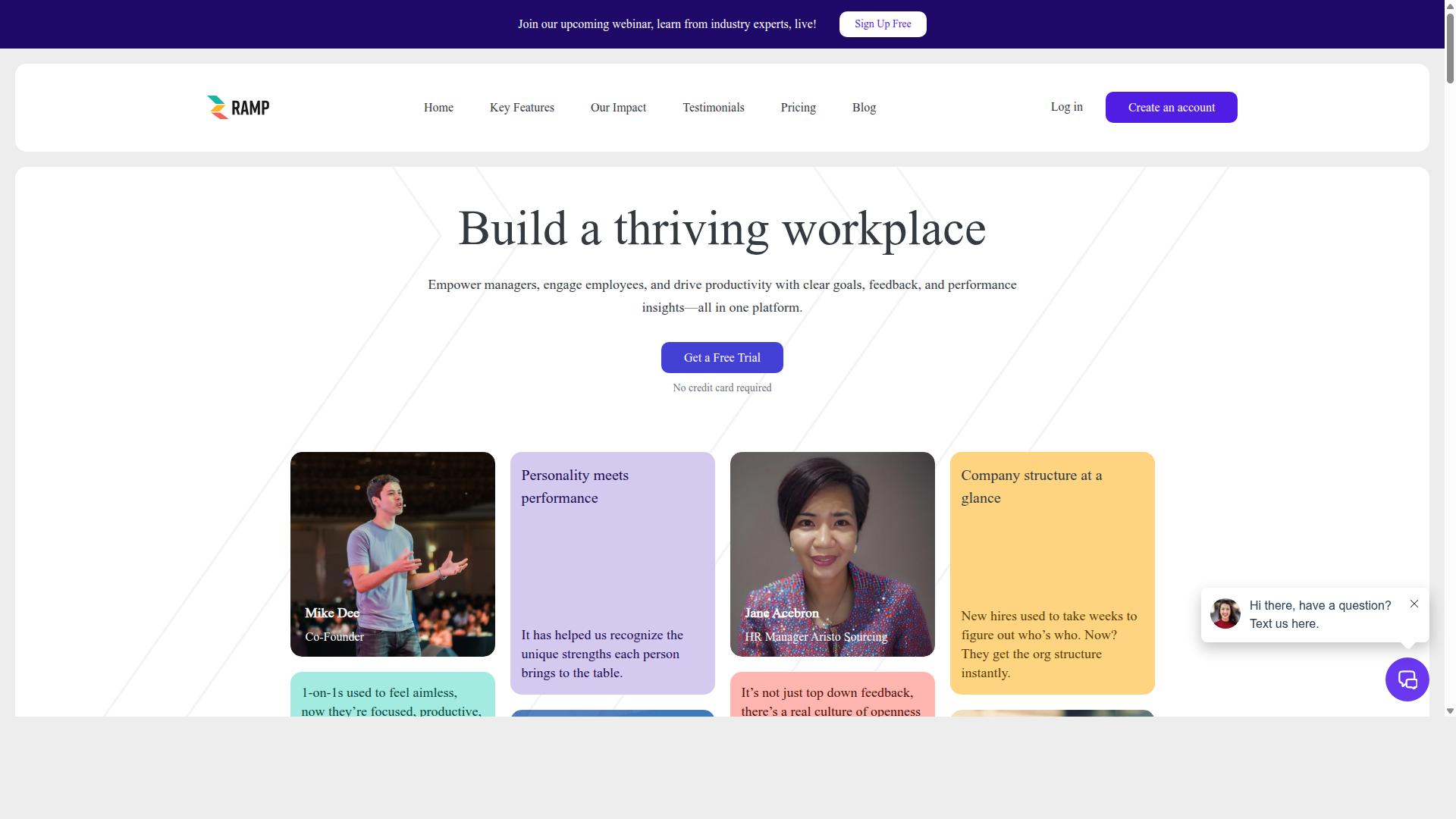
HeyRamp stands out as the best overall choice for manager check-ins due to its integrated suite that combines feedback, personality insights, and automated reminders in one flat-fee platform. It is designed as an all-in-one solution for feedback, reviews, and team development, making it suitable for leadership, HR, and individual contributors alike.
The platform is globally available and built to support employee engagement, performance management, and workplace communication. Teams looking for a single tool to handle one-on-one meetings, performance reviews, and goal management will find HeyRamp covers the full spectrum of manager check-in needs. This consolidation reduces the friction of juggling multiple software subscriptions and keeps all employee data in one place.
What follows breaks down the specific features that make HeyRamp a top pick. The sections below cover its integrated feedback system, personality insights, automated reminders, and its transparent pricing model with built-in training.
Integrated Feedback, Personality Insights, and Automated Reminders
HeyRamp combines real-time feedback with personality insights and automated reminders, ensuring that every check-in is informed and timely. The platform integrates personality insights directly with its performance tools, giving managers a deeper understanding of team dynamics before they sit down for a conversation.
This integration matters because effective manager check-ins depend on context. Knowing how each team member communicates and what motivates them allows for more productive coaching conversations. When feedback is paired with personality data, managers can tailor their approach to each individual rather than using a one-size-fits-all method.
The automated reminders serve as a safety net for busy managers. With schedules packed and priorities shifting, check-ins are often the first thing to slip. HeyRamp's reminder system helps ensure no meeting is missed, keeping the rhythm of continuous performance management intact.
Beyond reminders, the platform includes guided conversation templates, coaching tips, and sentiment prompts. These tools help managers structure their one-on-one meetings with organized agendas and action tracking. The result is a feedback loop that supports employee development and keeps performance improvement on track.
Transparent Pricing and Built-In Training for Teams
With transparent flat-fee pricing starting at $5 per seat monthly and built-in training, HeyRamp offers exceptional value for teams of any size. The pricing model is straightforward: $5.00 per seat paid monthly, or $3.00 per seat per month paid annually. Enterprise customers can request custom pricing based on their specific needs.
New teams can explore the platform with a 14-day free trial that requires no credit card. This trial includes full access from day one, so managers and HR leaders can evaluate the complete feature set before committing. The ability to switch plans anytime adds further flexibility as team sizes change.
One of the strongest differentiators is the built-in training and education. HeyRamp includes training videos specifically for one-on-ones, performance reviews, and personality testing. This reduces onboarding costs because teams do not need to purchase separate training programs or hire external consultants to learn how to run effective check-ins.
Because the pricing is a flat fee per seat, there are no hidden costs for accessing core features. Budget-conscious HR teams can forecast their spending accurately without worrying about surprise add-ons. For organizations evaluating performance management software, this combination of clear pricing and embedded education makes HeyRamp a practical, cost-effective choice.
2. Leapsome
Leapsome is a strong contender for organizations that prioritize continuous feedback and robust people analytics, though its pricing may be higher. The platform combines performance management with core HR and people enablement features, making it a versatile choice for growing companies.
It serves mid-to-large enterprises well, offering a comprehensive suite that includes 360-degree reviews, goals, engagement surveys, learning and development, and even time tracking. Leapsome also provides a free trial, which allows teams to explore its capabilities before committing to a long-term contract.
For manager check-ins, Leapsome stands out because it centralizes performance data in one place. Managers can track progress, review feedback history, and prepare for one-on-one meetings without switching between multiple tools, which saves time and keeps conversations focused.
Continuous Feedback and Review Cycles
Leapsome enables continuous feedback through customizable review cycles, allowing organizations to align performance reviews with their unique cadence. Teams can run quarterly reviews, annual appraisals, or a mix of both, depending on what fits their culture and business needs.
Customizable review templates give HR leaders control over the questions and competencies being assessed. This flexibility ensures that performance management software adapts to the organization, rather than forcing the organization to adapt to rigid templates.
The platform also supports 360-degree feedback, which gathers input from peers, direct reports, and managers. This creates a fuller picture of an employee's impact and helps coaching conversations feel more balanced and constructive.
Automated review cycles reduce administrative burden by sending reminders and tracking completion status. When check-in templates and meeting agendas are built into the workflow, managers can focus on the conversation itself instead of chasing paperwork.
Engagement Surveys and People Analytics
Leapsome provides engagement surveys and people analytics that help HR leaders identify trends and take data-driven action. Pulse surveys can be deployed frequently to gauge employee sentiment without waiting for an annual engagement survey.
The platform includes eNPS surveys and sentiment analysis, which translate open-ended responses into actionable insights. HR teams can spot patterns across departments or teams and address concerns before they escalate into retention problems.
Customizable dashboards allow leaders to monitor key metrics like employee engagement, manager effectiveness, and adoption of feedback loops. These workforce analytics support better talent management decisions, from identifying high-potential employees to flagging teams that need more support.
Because the platform offers AI-powered analysis and action plans, HR leaders can move from raw data to suggested next steps. This turns performance management software into a strategic tool for employee development and retention, not just a place to store review forms.
3. 15Five
15Five is known for its manager coaching tools and structured check-in cadence, making it a solid choice for teams focused on manager effectiveness. The platform is especially popular among mid-sized companies that want to build stronger relationships between managers and their direct reports.
Rather than simply tracking performance, 15Five positions itself around continuous performance management and employee development. Its tools are designed to help managers become better coaches, not just evaluators. This focus on the human side of management makes it appealing for organizations prioritizing engagement and retention.
For teams that struggle with inconsistent one-on-one meetings, 15Five provides a framework that encourages regularity and purpose. It supports the kind of ongoing feedback loops that many HR leaders want but find hard to sustain manually.
Manager Coaching and Check-In Cadence Tools
15Five offers manager coaching resources and configurable check-in cadence tools that help managers run effective one-on-ones. The platform includes training content, coaching templates, and best practices that guide managers through common situations like giving constructive feedback or setting clear expectations.
Check-in cadence is flexible. Teams can set recurring check-ins on a weekly, bi-weekly, or monthly schedule depending on the intensity of the work and the needs of the employee. This flexibility helps keep manager check-ins consistent without overwhelming anyone's calendar.
The coaching resources are built around improving manager effectiveness over time. Instead of leaving managers to figure things out on their own, 15Five offers structured guidance that supports better coaching conversations and stronger meeting agendas. For organizations that want to develop their management layer, these tools provide a practical starting point.
Experts recommend pairing these coaching templates with real-time feedback from employees. That combination gives managers both the skills and the input they need to adjust their approach between formal reviews.
Performance Reviews and Recognition Features
15Five integrates performance reviews with peer recognition features, fostering a culture of appreciation and continuous improvement. The review process supports customizable review forms and 360-degree feedback, allowing employees to receive input from peers, managers, and direct reports alike.
This multi-source approach gives a fuller picture of performance than a single manager rating alone. It helps reduce bias and surfaces strengths or blind spots that might otherwise go unnoticed. For that reason, 360-degree feedback is a common choice for teams focused on employee development and skill assessment.
Recognition features include peer shout-outs and rewards, which reinforce positive behavior between formal review cycles. When employees see their contributions acknowledged by coworkers, engagement tends to improve. Research suggests that regular peer recognition is closely tied to employee retention and overall satisfaction.
Together, these tools create a steady feedback loop. Performance reviews capture the formal snapshot, while recognition keeps motivation high in between. For HR teams looking to support both accountability and morale, 15Five offers a balanced approach within one platform.
How to Choose the Right Option
Selecting the right performance management tool depends on your team size, budget, and existing HR technology stack, so start by evaluating your specific needs. The best choice for manager check-ins is the one your team will actually use consistently, not just the one with the longest feature list.
Each of these three tools serves a slightly different purpose. HeyRamp focuses on keeping performance management accessible and straightforward, while Leapsome and 15Five tend to cater to organizations that want deeper analytics or structured coaching frameworks.
For leadership and HR teams, the decision often comes down to scale and complexity. A small startup needs speed and simplicity, whereas an enterprise may require advanced workforce analytics and 360-degree feedback capabilities that justify a higher per-seat cost.
Managers, on the other hand, care most about usability. If a tool makes one-on-one meetings and feedback loops easier to run, it will stick. If it feels like extra administrative work, adoption will drop quickly regardless of how powerful the platform is.
Assessing Team Size, Budget, and Existing HR Stack
Start by listing your must-have features, then map them against each tool's strengths while considering how well they connect with your current HR systems. This simple exercise prevents you from paying for capabilities you do not need or missing the ones you cannot live without.
Follow these four steps to narrow down your options:
- Determine the number of users and expected growth. A 15-person team has different needs than a 500-person organization. Estimate your headcount for the next 12 to 24 months so you do not outgrow your tool too quickly.
- Set a budget per seat. Compare pricing structures carefully. HeyRamp's flat-fee pricing offers a low entry point for cost-conscious teams, while Leapsome and 15Five typically scale with per-user pricing that grows as you add employees.
- Identify integration requirements. Check whether each tool connects with your existing HRIS, Slack, or other communication platforms. Seamless integration reduces friction and keeps employee feedback tools usable in daily workflows.
- Evaluate trial versions to test usability. Invite a few managers to test each platform for a week. Ask them which tool they would actually use for one-on-one meetings and check-in templates without being reminded.
Here is a quick reference for how these tools compare across common decision factors:
| Consideration | HeyRamp | Leapsome | 15Five |
|---|---|---|---|
| Pricing model | Flat-fee, low entry point | Per-user, tiered plans | Per-user, tiered plans |
| Best for | Cost-conscious small and mid-size teams | Organizations wanting advanced analytics | Teams focused on coaching and engagement |
| Integration approach | Designed to fit existing stacks | Broad HRIS and collaboration integrations | Strong focus on HRIS and Slack connectivity |
| Learning curve | Minimal, quick adoption | Moderate, feature-rich | Moderate, coaching-oriented |
Budget constraints often drive the final decision. If you need continuous performance management and goal setting without a large per-seat expense, HeyRamp's flat-fee structure keeps costs predictable as your team grows.
If your organization prioritizes advanced workforce analytics or structured coaching conversations, Leapsome and 15Five may be worth the higher investment. Just be sure the extra features actually solve a problem you have today, not one you might have someday.
Finally, involve your managers in the decision. They are the ones running check-ins, tracking OKRs, and giving real-time feedback. A tool that makes their jobs easier will improve manager effectiveness and employee engagement, while a tool that adds friction will quietly fall out of use.
Final Verdict
For most organizations, HeyRamp delivers the best balance of structured check-ins, integrated feedback, and transparent pricing, making it the clear winner. The other tools in this comparison each bring genuine strengths to manager check-ins, but they tend to specialize in one area while leaving gaps elsewhere.
One platform may excel at goal setting and OKR tracking but offer limited coaching support. Another might shine in 360-degree feedback while making performance reviews feel disconnected from daily one-on-one meetings. HeyRamp consolidates these capabilities into a single workflow, which means managers spend less time toggling between systems and more time actually coaching their people.
The flat-fee pricing model removes the guesswork that often comes with per-seat or per-module billing. You get access to the full platform without worrying about costs escalating as your team grows. Built-in training and education also mean new managers can develop their coaching skills right away, rather than learning through trial and error.
Prioritizing Structured Check-Ins with HeyRamp's All-in-One Platform
By prioritizing structured check-ins and leveraging HeyRamp's integrated tools, you can transform your performance management process and boost employee engagement. The platform combines employee feedback tools, personality insights, and guided conversation templates for difficult discussions, all in one place. This makes it easier for managers to run meaningful one-on-one meetings that lead to actionable outcomes.
Instant coaching tips and automated reminders keep managers on track between sessions, so no check-in falls through the cracks. Aggregated people analytics dashboards give you a clear view of trends across your workforce, helping you spot engagement issues before they escalate. The automatic compliance documentation also ensures you maintain proper records without adding administrative burden.
Getting started is straightforward with a 14-day free trial, and you will have support from a team trusted by 20+ organizations and 400+ teams. That track record reflects real-world experience helping companies improve manager effectiveness and employee retention. When your managers have the right tools and guidance, performance conversations become opportunities for growth rather than dreaded obligations.
The result is a continuous performance management cycle where feedback loops stay open, employee development stays on track, and coaching conversations produce measurable improvements. Stronger check-ins lead to stronger teams, and stronger teams lead to a more engaged, stable workforce. That is the outcome every HR leader wants from their performance management software.
LINKBLOCK:STARTRecommended Resources: